How to open a perfume shop: steps, costs, stock, pricing
How to open a perfume shop: the steps, what drives each cost, choosing first stock, authenticity, pricing and margin, a daily routine, mistakes and a checklist.
The Dashing team3 min read
The short answer: a perfume shop sells small, high-value bottles where trust matters as much as price. To open one, choose a spot with browsing traffic, check business and cosmetics-labelling rules with your local authority, buy from suppliers who can show where each bottle came from, hold a focused range, keep testers separate from stock, and price from cost, because bottles tie up cash for a long time.
The steps to open
- Choose a location where people browse and gift-buy, such as a mall, a market or a main street.
- Check licences and rules. Business registration, import rules, and how cosmetics must be labelled differ by place. For example, the European Commission requires certain fragrance allergens to be named on cosmetic labels in the EU. Ask your local authority what applies to you. This is not legal advice.
- Fit out with locked display cases, good lighting and a clean counter for testers.
- Find suppliers who can show where each bottle came from, and keep their invoices.
- Buy a first range of a few well-known names plus the styles your customers ask about.
- Set up a till and an item list with a barcode and size for every bottle.
- Decide a policy for testers, returns and gift wrapping.
What the money goes to
- Rent and deposit: visibility matters more than size.
- Fit-out: secure cases, lighting and a tidy counter.
- First stock: the largest item. It depends on how many brands and sizes you hold.
- Equipment: barcode scanner, receipt printer, till device and a camera or lock system.
- Staff: people who can explain scents sell more than a shelf can.
- Running costs: electricity, gift packaging and payment fees.
- A cash cushion: bottles can sit for months before they sell.
The break-even tool shows how many sales cover your fixed costs.
Choosing the first stock
Start with a few names that sell and a small number of sizes. Buy only from suppliers who give invoices, and keep them in case a customer or an inspector asks where a bottle came from. Keep testers in their own place and do not count them as stock. Count the bottles against your records often, because each one is worth a lot.
Pricing and margin
Price from cost, not from a rival's shelf. Put cost and price into the margin calculator for every bottle, print shelf labels with the price tags tool, and share a catalogue with the free perfume price list template. Decide in advance how much discount you allow, and keep it written.
A daily routine
- Open: check the cases, count the drawer.
- Sell: scan each bottle so stock stays correct.
- Close: count cash against sales, list bottles to reorder.
- Weekly: count the bottles in the cases against your records.
- Monthly: look at which brands sold and which sat.
Common mistakes
- Buying too many brands and sizes at once.
- Buying without invoices, then being unable to prove a bottle's source.
- Giving testers away or selling them as new stock.
- Discounting with no written limit.
- Mixing personal and shop cash.
A checklist
- Licence, import and labelling rules checked locally
- Display cases and security in place
- Supplier invoices and terms kept
- Item list with barcodes and sizes
- Tester, return and discount policy written
- Cash cushion set aside
Where Dashing helps
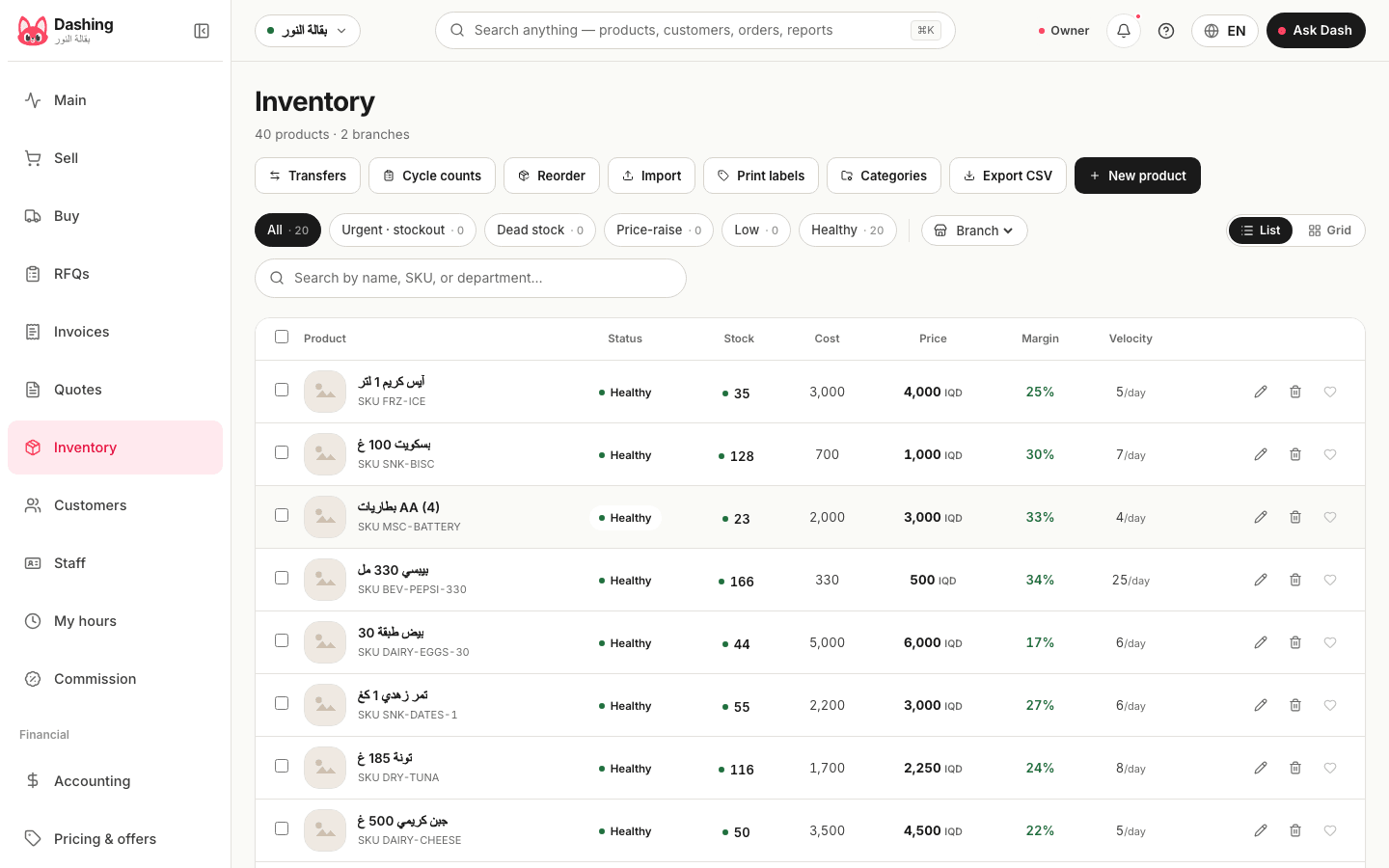
Dashing scans barcodes, works offline, keeps stock per item and records customer debts. See the perfume shop page, the free price list template and the free plan.
Costs, licences and margins vary by country; use your own quotes.
Sources
Outside facts come from the sources below. The statements about Dashing rest on the Dashing pages (accessed 2026-10-31).
- European Commission, "Fragrance allergens labelling" (accessed 2026-10-31).
- Dashing for perfume shops, https://dashingerp.com/en/for/perfume
- The free plan in Dashing, https://dashingerp.com/en/free
This article is also available in العربية · کوردی
In the product
- Perfume shopsPOS for perfume shops: sizes, decants, loyalty
- Profit margin calculatorProfit margin calculator: margin, markup and the price for a target
- Price tag makerPrice tags and shelf labels with barcode: print on A4 or a roll
- Break-even calculatorBreak even calculator for small business: units and revenue