How to open a bakery: steps, costs, ingredients, daily waste
How to open a bakery: the steps, what drives each cost, buying ingredients, pricing from cost, food safety, a daily routine, mistakes and a checklist.
The Dashing team4 min read
The short answer: a bakery turns flour, fat, sugar and time into goods that go stale in a day or two, so the real work is matching what you bake to what you sell. To open one, find a spot with morning foot traffic, check food business registration and inspection rules with your local authority, equip the ovens and prep area, cost every product from its ingredients, bake small batches first, and record what is left at close.
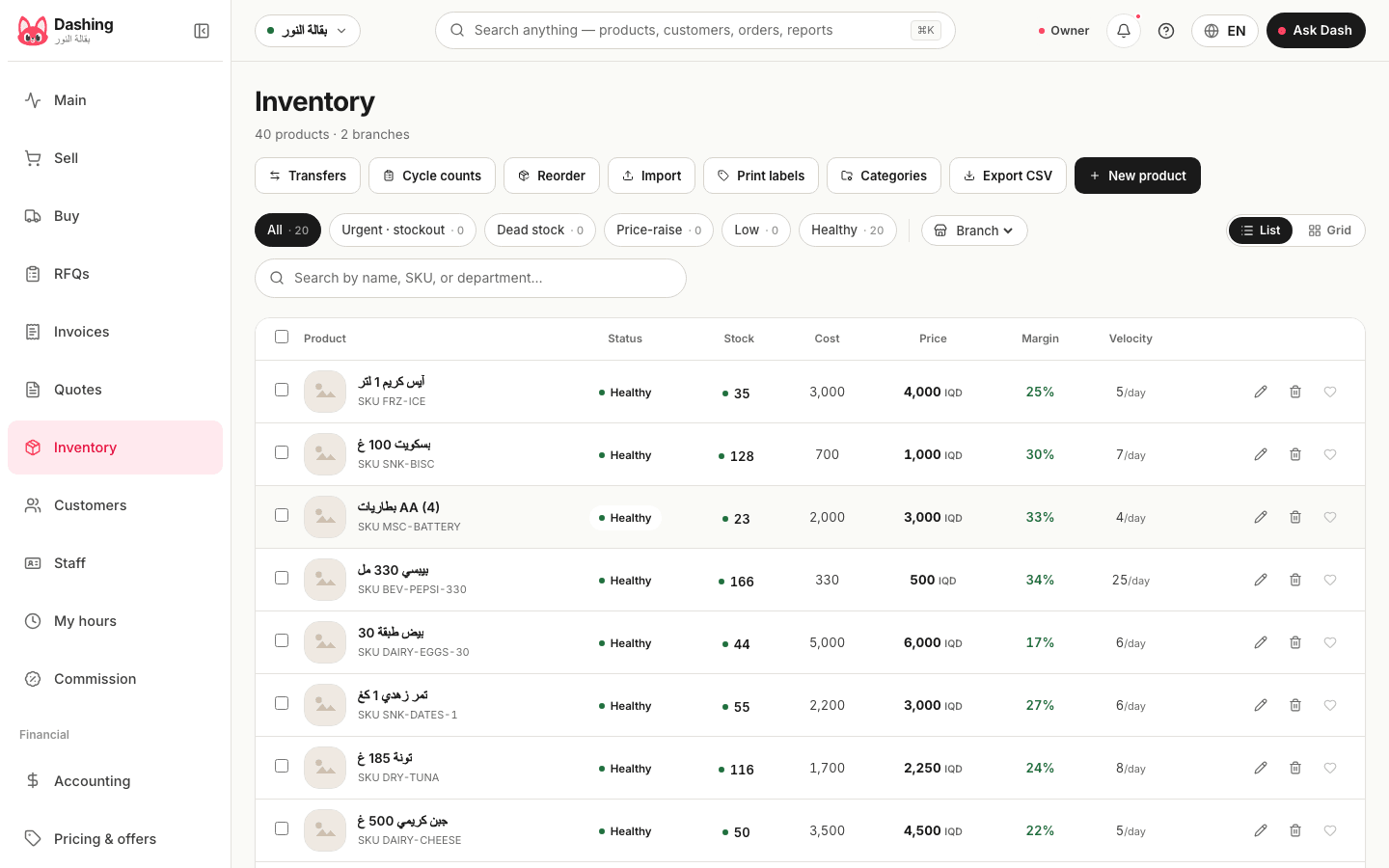
The steps to open
- Choose a location on a morning route: near homes, schools, offices or a main road.
- Check registration and inspections. Food business, premises and labelling rules differ by place. Ask your local authority. This is not legal advice.
- Plan the layout so raw ingredients, baking and the sales counter are kept apart and the prep area can be cleaned easily.
- Buy equipment (below).
- Choose a short product list you can make well every day.
- Set up suppliers for flour, yeast, fats, sugar, packaging and anything you do not make yourself.
- Write recipes with weights so every batch costs and tastes the same.
- Open softly, note what sells out and what is left, and adjust the next day's bake.
What the money goes to
- Rent and deposit.
- Fit-out: ventilation, flooring that cleans easily, sinks, shelving and a display counter.
- Equipment: ovens, mixer, proofing space, work tables, cooling racks, fridge, till device and receipt printer. The oven is usually the largest purchase.
- Ingredients and packaging: flour, yeast, fats, sugar, bags and boxes.
- Staff: bakers start early, so count the hours before opening too.
- Running costs: electricity or gas for the ovens, water and cleaning.
- A cash cushion for the weeks before regular customers form.
Use the break-even tool to see how many sales a day cover your fixed costs.
Choosing the first stock
Flour, sugar and packaging keep, while fillings, cream and dairy do not. Order dry goods in larger lots only when you know your weekly use, and buy fresh items often in small amounts. Food hygiene guidance from FAO and WHO (Codex) and the WHO five keys to safer food (keep clean, separate raw and cooked, cook thoroughly, keep food at safe temperatures, use safe water and raw materials) are a good base for your routines; your local rules come first.
Pricing and margin
Price each product from the cost of its ingredients and packaging, then add your share of rent, fuel and wages. Put the numbers in the margin calculator item by item and check the month with the profit tool. Ask whether your best seller is also your best earner; a cheap loaf that sells all day can earn less than a pastry that sells slowly.
A daily routine
- Before opening: bake, check the display, count the drawer.
- During the day: ring up every sale so the gaps between baked and sold stay visible.
- Close: count what is left, record it as waste or sell it at a set discount, count cash against sales.
- Weekly: compare flour and packaging used against what you bought and what you sold.
Common mistakes
- Baking too much, then throwing it away.
- Not weighing recipes, so the cost drifts.
- Giving away or eating stock without recording it.
- Pricing by a rival's sign instead of your cost.
- Letting raw and ready-to-eat items share a surface.
A checklist
- Registration and inspections confirmed locally
- Layout separates raw ingredients, baking and sales
- Equipment bought or quoted
- Recipes written with weights and costed
- Suppliers and prices written down
- Till and receipt printer tested
- Cash cushion set aside
Where Dashing helps
Dashing has a cashier that works offline, records sales and expenses, keeps customer debts and supports stock counts. See the bakery page, the free bakery receipt template and the free plan.
Costs, licences and margins vary by country; use your own quotes.
Sources
Outside facts come from the sources below. The statements about Dashing rest on the Dashing pages (accessed 2026-10-31).
- FAO and WHO, "General Principles of Food Hygiene (CXC 1-1969)", Codex Alimentarius, 2023 edition (accessed 2026-10-31).
- World Health Organization, "Five keys to safer food manual", 2006 (accessed 2026-10-31).
- Dashing for bakeries, https://dashingerp.com/en/for/bakery
- The free plan in Dashing, https://dashingerp.com/en/free
This article is also available in العربية · کوردی