How to open a grocery shop: steps, costs, first stock, margins
How to open a neighbourhood grocery shop: the steps, what drives the costs, choosing first stock, pricing, a daily routine, common mistakes and a checklist.
The Dashing team3 min read
The short answer: a grocery shop is a small, close-to-home shop that sells daily needs. To open one, choose a spot near homes, check the licences your local authority requires, fit out simple shelving and a fridge, stock the everyday items first, price each from its cost, and write down every sale and every debt from day one. It is cheaper to start than a supermarket, but it lives on repeat customers, so the habits matter more than the size.
The steps to open
- Pick the spot. Near homes, on a route people walk daily. Watch the street for a few days at the hours you plan to open.
- Check the licences. Registration, trade licence and food-handling rules depend on your country and city. Ask your local authority what applies. This is not legal advice.
- Fit out. Shelves, a fridge, a counter, and a lockable storeroom if the space allows.
- Find suppliers. Compare a wholesaler, a distributor and a market. Ask for each price per carton and the payment terms.
- Buy a small first stock of what sells every day.
- Set up the till and item list with barcodes, so each sale is one scan.
- Decide your credit rule before the first neighbour asks.
What the money goes to
- Rent and deposit: location and floor area.
- Fit-out: shelving, signage, lighting, and whether you buy new or used.
- First stock: the biggest part. It depends on how many lines you carry and how many of each.
- Equipment: shelves, a fridge, a barcode scanner, a receipt printer and a till device.
- Running costs: electricity (fridges run all day), water, packaging, transport from the supplier.
- A cash cushion for slow weeks.
Use the break-even tool to turn your rent and costs into a monthly sales target.
Choosing the first stock
Start with bread, rice, oil, sugar, tea, dairy, drinks, cleaning, and tobacco or snacks where legal and common. Ask your first customers what they buy elsewhere and add it. Buy the fast items often in small amounts and the slow items rarely. Keep a price list in a sheet: the free grocery price list and stock count sheet are ready to use.
Pricing and margin
Do not copy the shop across the road. Take your cost per piece, add the margin you need, and compare. A 2023 Supermarket News article reporting a dunnhumby survey put grocers' average net profit margin at 2.5%, which shows how little is left after costs, so waste and unrecorded credit hurt quickly. Use the margin calculator per item and the profit tool for the month.
A daily routine
- Open: count the drawer, check the fridge, put short-dated items in front.
- Sell: scan everything. Write down every credit sale with the customer's name.
- Close: count the cash against the day's sales and note what to buy tomorrow.
- Weekly: count one shelf, and list who owes you money.
Common mistakes
- Giving credit without a written record or a limit.
- Buying a big discounted carton of a slow item.
- Not separating shop cash from personal cash.
- Pricing by feel, so some items sell below cost.
- Never counting stock.
A checklist
- Licences confirmed locally
- Supplier prices and terms written down
- Item list with barcodes, cost and price
- Credit rule decided
- Scanner, printer and till tested
- Cash cushion set aside
Where Dashing helps
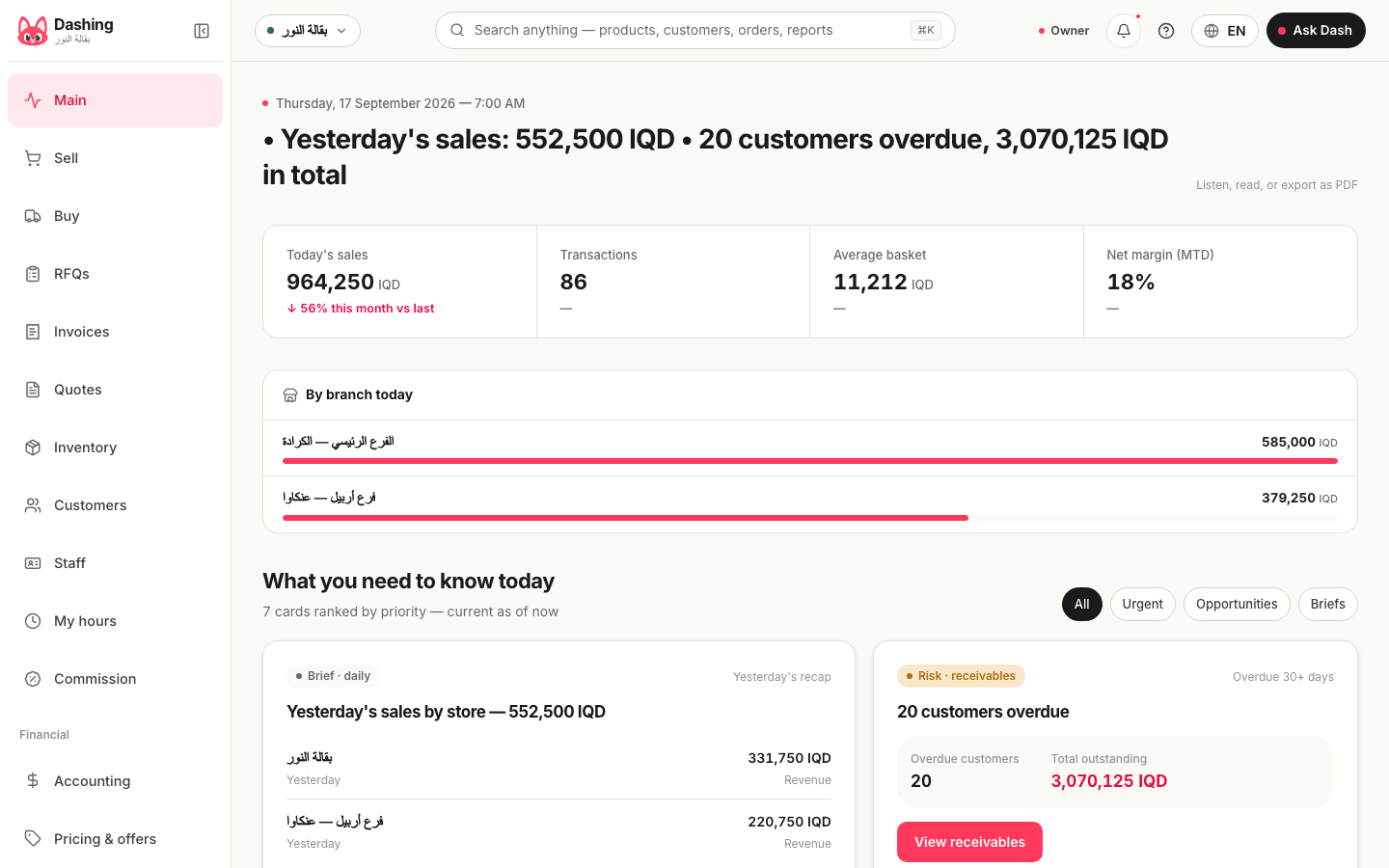
Dashing scans barcodes, works offline, keeps a debt balance per customer and shares a statement over WhatsApp (customer debts, share a statement). It supports stock counts and reorder suggestions. The free plan is one branch with no end date. See the grocery page and the free plan.
The figure above comes from the source named below. Costs and rules vary by country.
Sources
- Supermarket News, "5 things: 35% net profit margins? That's what consumers think", February 2023 (dunnhumby survey).
This article is also available in العربية · کوردی
In the product
- Grocery & supermarketGrocery and supermarket POS: cartons and expiry
- Profit margin calculatorProfit margin calculator: margin, markup and the price for a target
- Break-even calculatorBreak even calculator for small business: units and revenue
- Profit calculatorMonthly profit calculator for a shop: gross, net and break-even
- Customer debt bookCustomer debt tracker: who owes you, since when, and a reminder
- Price list with marginPrice list template (Excel), profit, margin and markup per item